Brick, Stone or Drywall: What Changes When Mounting a TV?
The important difference is the supporting wall assembly, not just the finish you can see. Drywall needs a suitable attachment to the structure behind it; brick and stone must be identified as part of the real assembly, including any veneer. The TV, bracket, surface and cable route must be planned together.
In this guide
Compare What Each Surface Tells You
| Visible finish | What must be established | Extra planning |
|---|---|---|
| Drywall | Supporting framing, wall condition and compatible mounting points. | Position relative to support, hidden services and a possible cable route. |
| Brick | Solid or faced construction, condition and the support required by the mounting system. | Attachment design, joints, fireplace construction and cable finish. |
| Stone or stone veneer | What supports the decorative face and where the bracket can be secured. | Uneven surface, bracket seating, mantel clearance and cable access. |
A stud finder reading or a close-up photograph alone does not describe the entire assembly. A professional plan should explain where the load is supported without assuming every wall of the same appearance is built the same way.
Why Full Motion Changes the Review
When a screen extends away from the wall, its load acts farther from the attachment. The bracket’s instructions and wall compatibility matter throughout its movement. A mount that fits the TV’s holes is not enough if its intended wall attachment is unsuitable.
Review mount types and the space the actual screen needs. Do not copy fastener sizes from an unrelated installation or assume that mortar is always the right place to drill.
Real Brick and Stone Examples
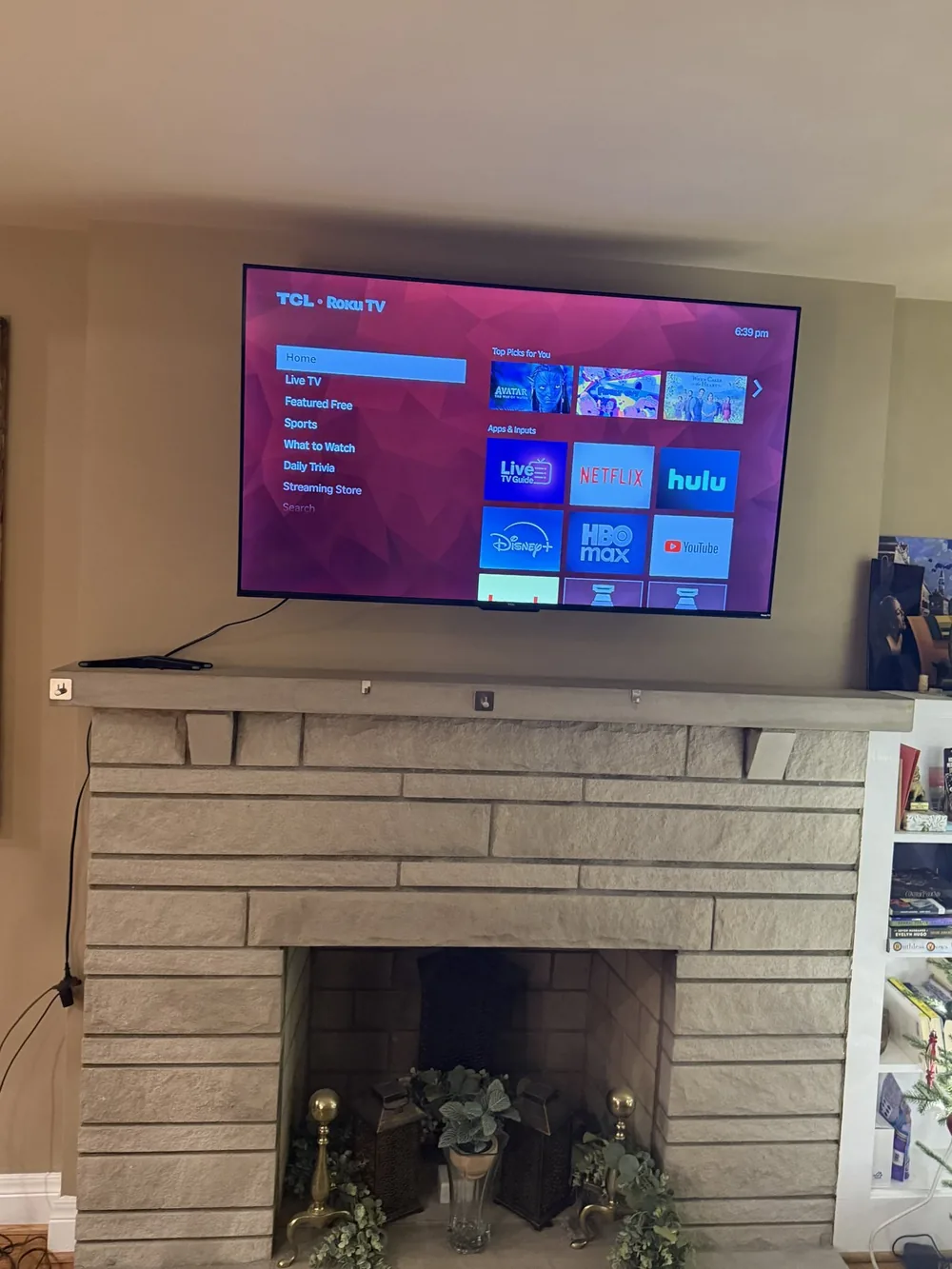
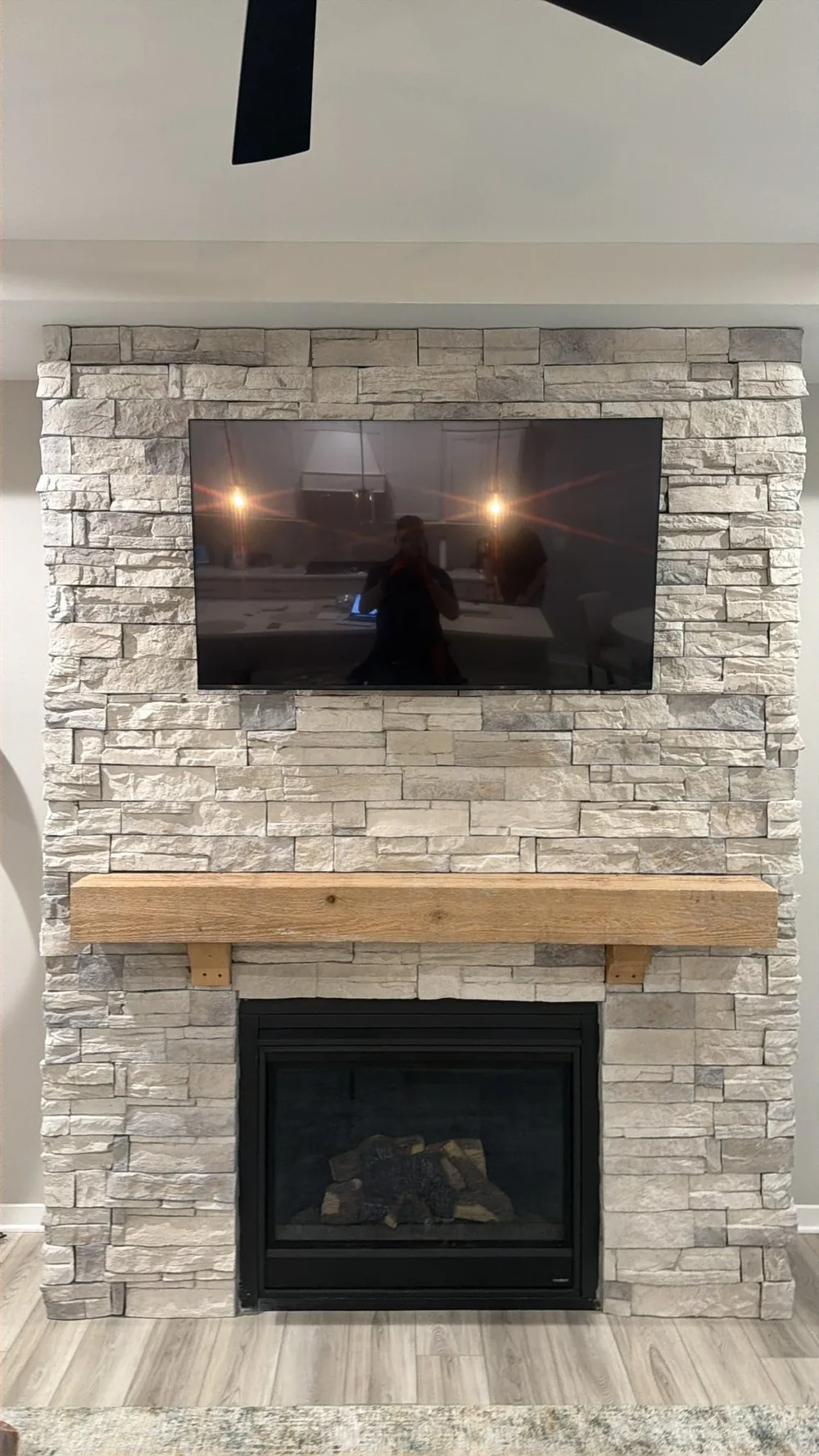
The brick example is a documented 55 inch installation in St. Matthews. The stacked stone example is our own project, but its individual city is not documented. We keep those distinctions visible rather than assigning both photos to the same neighborhood.
Compare our brick fireplace service and stone-faced fireplace service for the relevant installation options.
Surface and Cable Route Are Separate Questions
A drywall finish does not guarantee a clear cavity; a stone face does not tell you whether another route exists. Equipment, insulation, framing and other concealed components can affect the plan. Choose the cable finish after the route is understood.
We do not conceal cables through a wood-burning fireplace or chimney. A suitable surface raceway can be an option for a standard TV. Read how to plan the cables before assuming they can disappear behind the surface.
What to Show Us Before the Visit
Send a wide photo showing the wall, furniture and outlets, plus a close view of an unusual surface. Include the TV model, bracket model and whether it is above a fireplace. If you know the wall assembly, include that information; if you do not, say so instead of selecting the cheapest wall option.
We agree on placement with blue tape, protect the work area and clean installation dust and debris. The installation process still applies even though the attachment plan differs.
How the Surface Affects the Quote
One standard 32 to 85 inch TV on drywall, using your compatible mount and without a soundbar, is $210 with visible cables, or $360 with cables completely hidden where the wall and cable route allow it. Supplied mounts, other surfaces and added services change the total. Masonry and fireplace choices are different configurations. Select the actual surface in booking to see its total. An unfamiliar assembly, damaged substrate or custom mounting arrangement may need a scope review before scheduling.
Questions Homeowners Ask
Can a TV be mounted on a stone veneer?
The supporting assembly and a suitable mounting method must be identified. The visible veneer alone is not proof that it can carry the bracket.
Do all brick installations use mortar joints?
No universal placement rule fits every wall and mounting system. The structure, condition and manufacturer’s attachment requirements control the plan.
Is drywall itself what holds a large TV?
The installation needs a mounting system suitable for the supporting assembly. Do not infer adequate support just from a finished drywall surface.
Should I choose masonry or fireplace in booking?
Choose the description that matches the installation location. A masonry fireplace and an ordinary masonry wall can be different selections; ask if the actual assembly is unclear.
Your Next Step
Choose the relevant TV mounting service, or review the fireplace planning checklist before selecting your surface.
Explore related decisions in our TV Mounting Guides.