How to Hide TV Wires Without Losing Access to Your Equipment
Choose the equipment location first, then decide whether the cables should remain visible, run in a surface raceway or use a suitable concealed route. Power, signal cables and any connection box need separate planning. A cable-free front view should still leave equipment accessible and follow the instructions for the cables and devices involved.
In this guide
- Map What Actually Connects to Your TV
- Choose Between Three Different Finishes
- Power Is Not the Same as a Signal Cable
- What Real Concealed Setups Look Like
- Fireplaces and Moving Mounts Need a Different Check
- Price the Finish You Actually Want
- Common Cable-Planning Mistakes
- Questions Homeowners Ask
- Your Next Step
Map What Actually Connects to Your TV
List the TV, power connection, streaming devices, game console, cable box and soundbar. A TV using built-in streaming apps may need fewer signal cables, but it still needs power. If devices sit in a cabinet across the room, that route is different from equipment directly below the screen.
Decide which connections you may want to change later. Avoid trapping a box where you cannot reach its ports or leaving a connector bent tightly against a flush screen.
Choose Between Three Different Finishes
- Visible cables: connections remain outside the wall. Organize the route and keep the necessary movement clear.
- Surface raceway: a cover follows the wall. It can tidy a suitable standard-TV installation when an interior route is unsuitable.
- Cables completely hidden: the proposed route and equipment arrangement must be suitable for concealment. Not every wall, fireplace or device layout allows it.
Art TV booking offers a concealed or non-concealed package; raceway is not an Art TV option. Read the Frame guide if your screen uses a model-specific connection setup.
Power Is Not the Same as a Signal Cable
Do not put an ordinary extension cord or the TV’s ordinary detachable power lead inside the wall as a shortcut. The selected power arrangement and any concealed cables must be suitable for that use and follow their manufacturer’s instructions. Work requiring an electrician needs the appropriate professional; a hidden-wire selection does not expand the advertised electrical scope.
Keep the planning practical: identify the outlet and the equipment location, show us the wall, and choose the finish. The appointment’s agreed scope must match the actual route. Samsung’s mounting guidance distinguishes device planning and in-wall-rated cable options.
What Real Concealed Setups Look Like
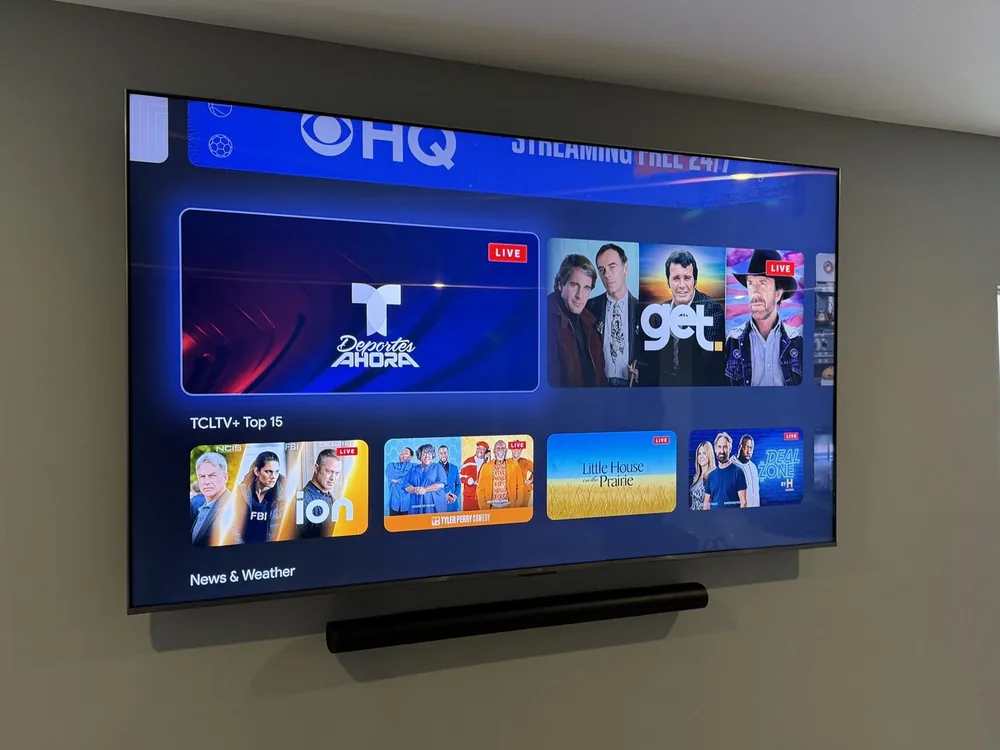
The 98 inch TCL and Sonos installation in Fisherville combines concealed wiring with two mounted devices. Our 75 inch living room project in Prospect shows a separate concealed TV setup. The finished front view documents the result; it is not a diagram of an unseen route inside the wall.
Fireplaces and Moving Mounts Need a Different Check
We do not conceal cables through a wood-burning fireplace or chimney. A suitable surface route may be the better standard-TV option. Decorative stone does not prove a usable cavity exists behind it. See fireplace planning before assuming concealed cables are available.
A moving bracket needs enough cable travel to extend and turn without pulling connections. Plan the soundbar and its power and signal route too. TV concealment does not automatically include soundbar concealment.
Price the Finish You Actually Want
One standard 32 to 85 inch TV on drywall, using your compatible mount and without a soundbar, is $210 with visible cables, or $360 with cables completely hidden where the wall and cable route allow it. Supplied mounts, other surfaces and added services change the total. Supplied mounts, different surfaces, larger size bands and soundbar installation change those examples. Choose each finish once in the quote and check its breakdown.
Common Cable-Planning Mistakes
Do not start with “hide everything” before deciding where the devices live. Do not assume wireless video eliminates power leads, that every HDMI cable is suitable inside a wall, or that an adhesive cover can be removed from every paint finish without damage. In a rental, get permission for the specific route before work begins.
Questions Homeowners Ask
Can you hide wires without opening the wall?
A suitable surface raceway can cover the route for a standard TV. It is a different finish from in-wall concealment and remains on the surface.
Does hidden TV wiring include my soundbar?
The soundbar has its own mounting and cable-finish selection. Choose both if you want both devices installed with concealed cables.
Can every brick fireplace hide cables inside?
No. The wall assembly, fireplace and cable route have to allow it. We do not route cables through a wood-burning fireplace or chimney.
Can I add a console after the installation?
Plan likely devices now so their connection location remains accessible. A later device can need another cable or route; it is not automatically covered by the original installation.
Your Next Step
See our TV wire concealment service and choose the eligible finish for your room before scheduling.
Explore related decisions in our TV Mounting Guides.